Block 2 Data Visualisation and Blog
During block two, we explored the affordances of data. In my context as a primary school teacher, I’m intrigued by the impact live learning data dashboards could have on learning. All sorts of data could be at play. How could technology and digital systems capture learning and/or data to impact student outcomes?
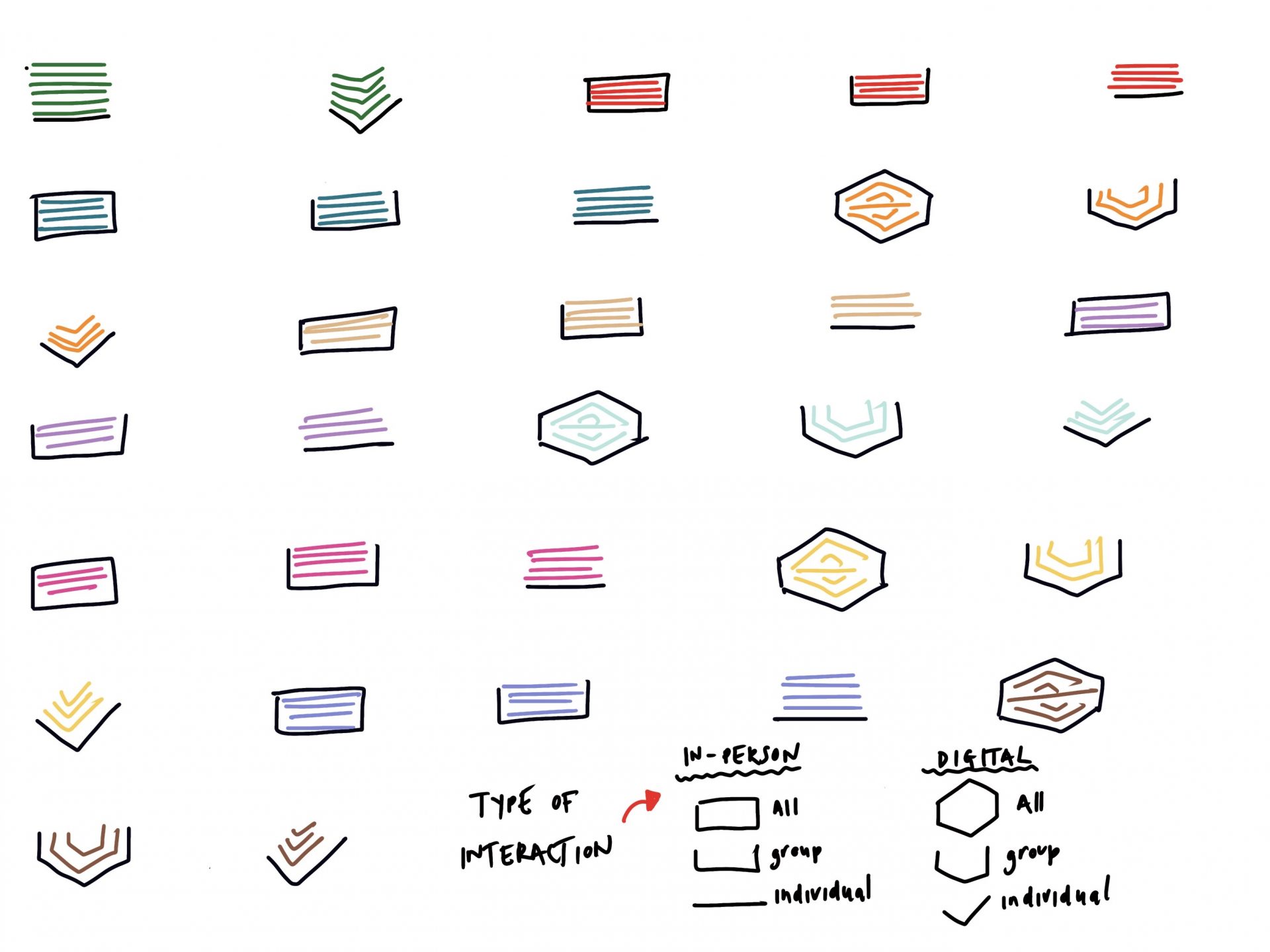
In my block one data visualisation, I explored my relationship with data in the context of my work. I’m interested in our relationship with data in a school setting, so I decided to explore my students’ experience with data for this block. As a starting point, I considered classroom relationships; how do students interact with their teacher and peers? How often does this happen in person compared to a digital environment? What data could be captured if teachers were given access to learning dashboards?
I started by listing the types of interactions in my classroom. From teacher-led to peer discussion, I also noted the (potential) frequency of these moments. While only some exchanges have been listed here, I wanted to document how often students might interact digitally. If a live learning dashboard were to be created, data from such digital platforms could prove helpful.
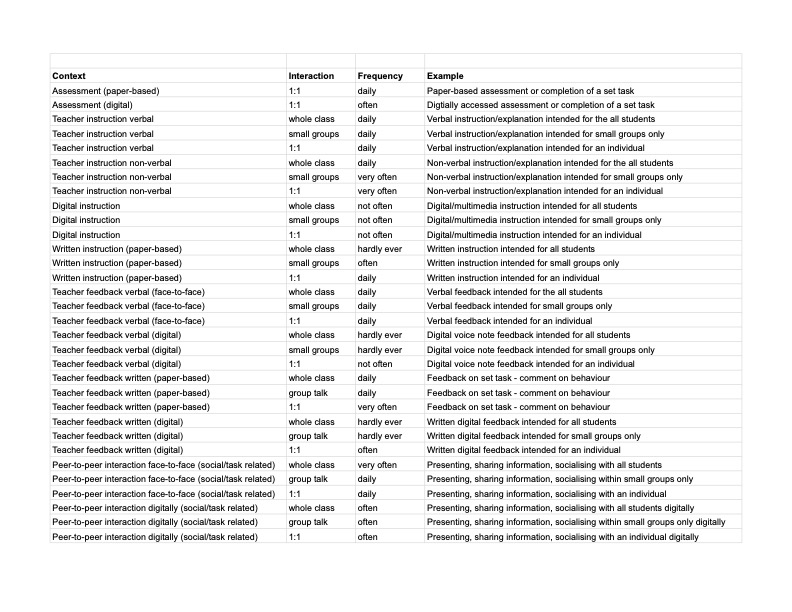
My list above shows that there are more face-to-face interactions with teachers in person rather than in the digital realm. Therefore, we would have to rely more on capturing live interactions between students and teachers to get valuable insights. This is problematic. First, how can a digital system capture meaningful interactions between students and their teacher? How might verbal and non-verbal interactions infer meaning in any given context? We also need to recognise that peer-to-peer exchange is just as important! Cultural and contextual aspects of a classroom may need to be considered too. Some students may be free to express all ranges of emotions and thoughts, while others might be conditioned to be docile and recipients of teacher knowledge. Secondly, interactions in the classroom are not just between one child and their teacher. Whole class and group working scenarios also generate unique forms of data. How might these complex interactions be interpreted?
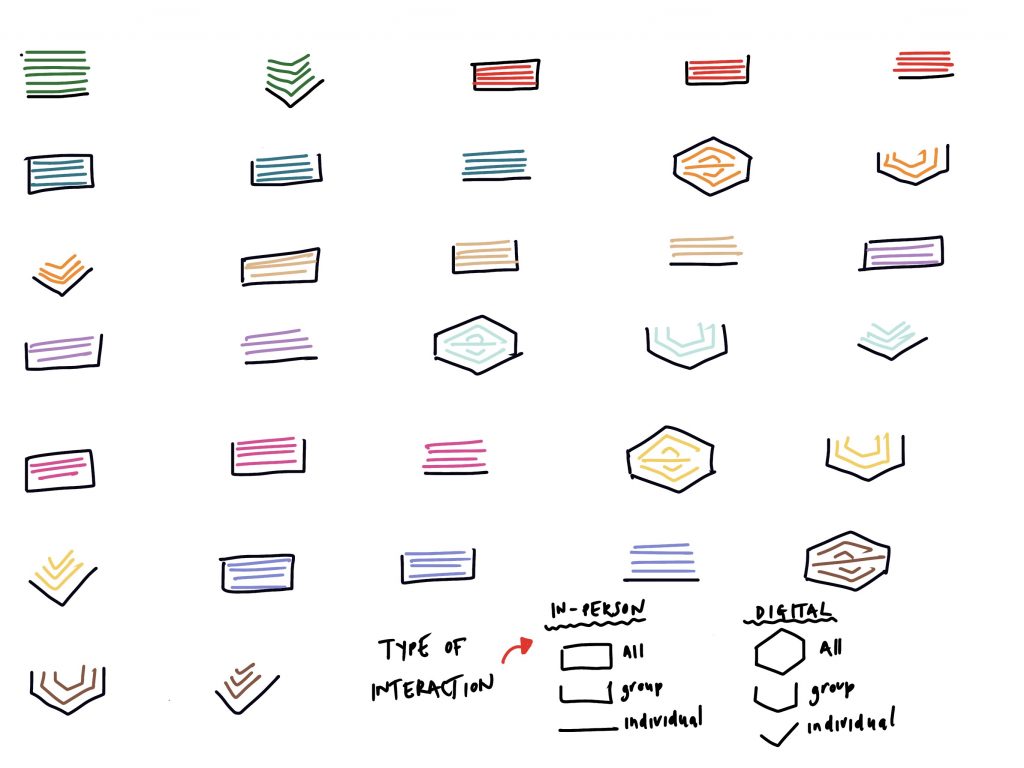
My final visualisation shows that student and teacher interaction predominately occurs face-to-face (in my current context). While students interact with teachers and peers digitally, this might only happen occasionally. I opted not to show the frequency of interaction in my final visual, despite recording it, as I felt the types of interaction were more telling. If we want to use data to help inform or impact learning in the classroom, we must consider how we might capture the many nuances and forms of interaction that occurs. We must also consider the ethical implications of taking such an approach. However, my final question would be, why would we go to such lengths? If fully trained and successful teachers can continue to support and develop learners, is there a need for this type of technology?

Really like your visualisations here Craig. I think you’ve managed to capture a lot of data, but represent it in a really elegant way.
This is a really important point: “Some students may be free to express all ranges of emotions and thoughts, while others might be conditioned to be docile and recipients of teacher knowledge.”
It’s not something I had thought about during this block, but I see this a lot working in HE where the culture and background of students play a major factor in how much they engage in class discussion for example. Do you think the more docile students you refer to would be more willing to engage in discussion if it took place online, or do you think it would be the same regardless of the format?
“my final question would be, why would we go to such lengths? If fully trained and successful teachers can continue to support and develop learners, is there a need for this type of technology?” My thoughts on this is that I suspect EdTech companies would say it’s a issue of scale and personalisation. Perhaps maybe not as much of a factor in primary education where I suspect you have up to 30 students at most per teacher? However, in tertiary education, with cohorts in their hundreds, I imagine technology companies would claim that it’s not possible for any teacher to give students the support and level of personalised learning they ‘require’. They’d therefore position the technology as the solution to ‘help’ scale up teaching. Not saying I agree with that as much, but that’s my assumption.
Your comments are very thoughtful Craig and surface many of the complexities and difficulties of trying to capture information that might be useful to teachers. The distinction that you make in your question “How could tech capture learning and/or data to impact student outcomes?” is astute. Do we know enough about what learning is in order to measure it, or are we able to capture only what is measurable, thereby shifting education practice towards doing so? Equally problematic as you remark is how to ‘harvest’ data from diverse face-to-face individual and collective interactions that occur in the classroom and compute their value. Your comments conclude with questions to which there will be a range of answers depending on the interests of those who respond, many with good intentions. Is it enough to know that such lengths are being “gone to” and to meet them with an informed, critical eye?